The Evolution Beyond Voice Commands
The latest generation of personal assistant robots represents a quantum leap beyond traditional voice-activated systems. These advanced platforms combine sophisticated natural language understanding, computer vision, and emotional intelligence to create truly interactive experiences that adapt to individual users' preferences, habits, and emotional states.
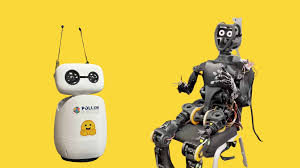
Modern personal assistant robots like the Reachy Mini demonstrate how physical embodiment enhances digital assistance capabilities. The combination of expressive movement, visual feedback, and spatial awareness creates more engaging and effective interactions than purely voice-based systems can achieve.
Multimodal AI Integration
Breakthrough innovations in multimodal AI have enabled personal assistant robots to process and understand information across multiple sensory channels simultaneously. These systems can analyze voice tone, facial expressions, body language, and environmental context to provide more appropriate and helpful responses.
The integration of large language models with computer vision and audio processing creates assistants that can understand not just what users say, but how they say it and the context in which they're speaking. This holistic understanding enables more nuanced and helpful interactions.
Emotional Intelligence and Empathy
Advanced personal assistant robots now incorporate sophisticated emotional recognition and response systems. These capabilities enable robots to detect user stress levels, excitement, confusion, or frustration and adapt their behavior accordingly. Such emotional intelligence transforms robots from mere tools into more supportive companions.
Machine learning algorithms analyze micro-expressions, voice patterns, and behavioral cues to develop personalized understanding of individual users' emotional states and communication preferences. This personalization creates more satisfying and effective assistance experiences.
Proactive Assistance Capabilities
Modern personal assistant robots have evolved beyond reactive responses to offer proactive assistance based on learned patterns and contextual awareness. These systems can anticipate user needs, suggest helpful actions, and provide timely reminders without explicit requests.
Integration with calendar systems, smart home devices, and personal data sources enables robots to offer contextually relevant suggestions and assistance. For example, a robot might remind users about upcoming meetings while offering to adjust room lighting and temperature for optimal productivity.
Natural Language Understanding Advances
Breakthrough improvements in natural language processing have enabled personal assistant robots to understand complex, multi-part requests and maintain context across extended conversations. Users can now engage in natural dialogue rather than learning specific commands or phrases.
These systems handle ambiguity, implied context, and conversational nuances that would have challenged earlier generations of AI assistants. The result is more natural and efficient communication that feels less like interacting with a machine and more like consulting with an intelligent colleague.
Physical Interaction and Manipulation
Unlike purely digital assistants, embodied personal assistant robots can physically interact with their environment to provide practical assistance. Advanced manipulation capabilities enable tasks like organizing objects, operating devices, and providing physical demonstrations or guidance.
Precise motor control, combined with computer vision and force feedback, enables safe and effective physical assistance in home and office environments. These capabilities bridge the gap between digital intelligence and physical utility.
Privacy-Preserving AI Architecture
Recent innovations address growing privacy concerns through edge computing architectures that process sensitive information locally rather than transmitting it to cloud services. These approaches maintain sophisticated AI capabilities while protecting user privacy and reducing dependence on internet connectivity.
Federated learning techniques enable personal assistant robots to improve their capabilities through shared learning while keeping individual user data private. This approach balances the benefits of collective intelligence with personal privacy protection.
Adaptive Learning and Personalization
Advanced personal assistant robots continuously learn from interactions to provide increasingly personalized assistance. Machine learning algorithms adapt to individual communication styles, preferences, and routines, creating unique assistant personalities for each user.
This personalization extends beyond simple preference settings to include understanding of work patterns, social relationships, and personal goals. The result is assistance that becomes more valuable and relevant over time as the system develops deeper understanding of user needs.
Integration with Smart Ecosystems
Modern personal assistant robots serve as intelligent hubs for smart home and office ecosystems, coordinating multiple devices and services to create seamless user experiences. They can manage lighting, temperature, security, entertainment, and communication systems through unified interfaces.
This integration capability transforms personal assistant robots into central control points for digital lifestyles, simplifying complex technology management while providing intelligent optimization based on user preferences and patterns.
Advanced Computer Vision Applications
Breakthrough computer vision capabilities enable personal assistant robots to understand and interact with their visual environment in sophisticated ways. Object recognition, scene understanding, and activity detection support a wide range of practical assistance applications.
Visual capabilities extend to reading documents, recognizing faces, understanding gestures, and monitoring safety conditions. These features enable robots to provide assistance that would be impossible for purely audio-based systems.
Collaborative Intelligence Features
Innovative personal assistant robots can collaborate effectively with human users on complex tasks, providing complementary intelligence rather than simply following commands. These systems contribute ideas, identify potential issues, and suggest optimizations based on their analysis capabilities.
This collaborative approach transforms the human-robot relationship from master-servant to partnership, where both parties contribute unique strengths to achieve better outcomes than either could accomplish alone.
Health and Wellness Monitoring
Advanced personal assistant robots incorporate health monitoring capabilities that can detect changes in user behavior, speech patterns, or physical condition that might indicate health concerns. These systems provide valuable early warning capabilities while respecting privacy boundaries.
Integration with wearable devices and environmental sensors enables comprehensive wellness monitoring that can help users maintain healthy habits, medication schedules, and activity levels. This capability is particularly valuable for elderly users or those with chronic health conditions.
Educational and Training Applications
Personal assistant robots are increasingly serving educational roles, providing personalized tutoring, language practice, and skill development support. Their ability to adapt teaching methods to individual learning styles and provide patient, consistent instruction makes them valuable educational tools.
Interactive demonstrations, visual explanations, and hands-on guidance capabilities enable these robots to support learning across diverse subjects and skill levels. The combination of AI intelligence and physical embodiment creates uniquely effective educational experiences.
Security and Authentication Innovations
Advanced personal assistant robots incorporate sophisticated security features including biometric authentication, behavioral analysis, and secure communication protocols. These systems can distinguish between authorized users and strangers, adapting their behavior and access permissions accordingly.
Multi-factor authentication combining voice recognition, facial recognition, and behavioral patterns provides robust security while maintaining user convenience. These security innovations enable personal assistant robots to handle sensitive information and perform authorized actions safely.
Future Innovation Directions
Emerging innovations in personal assistant robotics include brain-computer interfaces for thought-based control, advanced haptic feedback for enhanced physical interaction, and quantum computing integration for unprecedented processing capabilities.
Augmented reality integration promises to overlay digital information on physical environments, while advances in materials science may enable more lifelike and durable robotic forms. These innovations suggest even more transformative capabilities in future generations of personal assistant robots.
Market Impact and Adoption Trends
The breakthrough innovations in personal assistant robots are driving rapid market adoption across consumer, business, and institutional sectors. Cost reductions, capability improvements, and growing user comfort with AI technology are accelerating deployment across diverse applications.
Market analysis indicates strong growth potential as these technologies mature and become more accessible. The combination of practical utility and engaging interaction makes personal assistant robots increasingly attractive to mainstream consumers and businesses.
Conclusion
The breakthrough innovations transforming personal assistant robots represent a fundamental shift in human-machine interaction. These systems are evolving from simple tools to intelligent companions that understand, adapt, and contribute to human activities in meaningful ways.
As these technologies continue to mature, we can expect even more sophisticated capabilities that will further integrate robots into daily life while maintaining the human-centered design principles that make them truly helpful rather than merely technologically impressive. The future of personal assistance is embodied, intelligent, and increasingly indispensable.