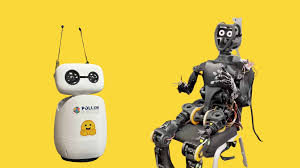
Fundamental Design Philosophy Differences
Desktop and industrial robots represent fundamentally different approaches to robotic design, each optimized for distinct operational environments and use cases. Desktop robots prioritize accessibility, safety, and human interaction, featuring compact form factors that integrate seamlessly into office and home environments. Their design philosophy centers on democratizing robotics technology and making advanced capabilities available to non-technical users.
Industrial robots, conversely, are engineered for power, precision, and reliability in demanding manufacturing environments. These systems prioritize payload capacity, speed, and repeatability over user-friendliness, often requiring specialized training and safety infrastructure for operation. The design philosophy focuses on maximizing productivity and minimizing downtime in industrial settings.
Scale and Physical Specifications
The most obvious difference lies in physical scale and capabilities. Desktop robots typically measure between 10-30 centimeters in height, weigh 1-5 kilograms, and handle payloads of up to 500 grams. These specifications make them suitable for light manipulation tasks, educational applications, and interactive demonstrations without requiring significant desk space or structural support.
Industrial robots span a much broader range, from compact collaborative robots (cobots) weighing 25-30 kilograms to massive industrial arms exceeding 1,000 kilograms. Payload capacities range from 3 kilograms for light cobots to over 1,000 kilograms for heavy-duty applications. This scale difference directly impacts their operational capabilities and target applications.
Cost Structure Analysis
The cost differential between desktop and industrial robots reflects their target markets and capabilities. Desktop robots typically range from $300 to $3,000, making them accessible to individual users, educational institutions, and small businesses. This pricing includes not just the hardware but often comprehensive software packages and educational resources.
Industrial robots represent significantly higher initial investments, ranging from $25,000 for basic cobots to over $500,000 for advanced manufacturing systems. However, this comparison doesn't account for total cost of ownership, which includes installation, programming, safety systems, and ongoing maintenance—factors that can multiply the initial investment several times over.
Programming and User Interface Approaches
Desktop robots emphasize user-friendly programming interfaces designed for non-experts. Many support visual programming languages, drag-and-drop interfaces, and natural language commands. Python and JavaScript support makes them accessible to a broad programming community, while pre-built behaviors allow immediate functionality without coding expertise.
Industrial robot programming typically requires specialized knowledge of proprietary languages and extensive training. Systems like KUKA's KRL, ABB's RAPID, or FANUC's Karel demand professional expertise and considerable time investment. However, this complexity enables sophisticated control over precise movements, force feedback, and integration with manufacturing execution systems.
Safety Considerations and Standards
Safety approaches differ dramatically between the two categories. Desktop robots incorporate inherent safety through limited force output, soft materials, and emergency stop mechanisms. Their low power and mass minimize injury potential, allowing operation in close proximity to users without extensive safety infrastructure.
Industrial robots must comply with stringent safety standards like ISO 10218, requiring safety barriers, light curtains, emergency stops, and risk assessments. Even collaborative industrial robots designed for human interaction require careful implementation of safety functions and ongoing monitoring to ensure worker protection.
Application Domains and Use Cases
Desktop robots excel in education, research, personal assistance, and light automation tasks. They serve as learning platforms for robotics concepts, interactive demonstrations, and rapid prototyping tools. Applications include surveillance, entertainment, educational assistance, and small-scale automation tasks in offices or laboratories.
Industrial robots dominate manufacturing environments, handling welding, painting, assembly, material handling, and quality inspection tasks. Their precision and reliability make them essential for automotive production, electronics manufacturing, food processing, and pharmaceutical packaging applications requiring consistent, high-volume output.
Connectivity and Integration Capabilities
Modern desktop robots typically feature comprehensive connectivity options including WiFi, Bluetooth, and cloud integration. They often support IoT protocols and can integrate with smart home systems, web services, and AI platforms. This connectivity enables remote operation, data sharing, and integration with broader digital ecosystems.
Industrial robots focus on integration with manufacturing systems through fieldbus protocols like EtherCAT, PROFINET, or DeviceNet. They connect to programmable logic controllers (PLCs), manufacturing execution systems (MES), and enterprise resource planning (ERP) systems, prioritizing real-time communication and industrial network compatibility.
Artificial Intelligence and Learning Capabilities
Desktop robots often incorporate cutting-edge AI capabilities, leveraging cloud-based machine learning services and computer vision systems. They can access vast model repositories, implement natural language processing, and adapt behaviors through user interaction. This AI integration is often their primary value proposition.
While industrial robots are adopting AI technologies, integration tends to be more conservative, prioritizing proven reliability over cutting-edge capabilities. AI applications focus on predictive maintenance, quality control optimization, and adaptive path planning rather than conversational interaction or general-purpose learning.
Maintenance and Longevity Expectations
Desktop robots typically require minimal maintenance, often limited to software updates and occasional hardware cleaning. Their consumer-oriented design prioritizes ease of ownership over long-term serviceability, with many components designed as replaceable modules rather than repairable systems.
Industrial robots are designed for decades of operation with proper maintenance. They feature replaceable wear components, comprehensive diagnostic systems, and often include predictive maintenance capabilities. Maintenance is typically performed by certified technicians and follows strict schedules to ensure continuous operation.
Customization and Extensibility
Desktop robots often embrace open-source principles, providing access to hardware designs, software code, and modification guides. This openness encourages experimentation and customization, allowing users to adapt robots for specific applications or learning objectives.
Industrial robot customization typically requires working with system integrators and following manufacturer specifications. While extensive customization is possible, it requires professional expertise and often voids warranties if not performed according to strict guidelines.
Performance Metrics Comparison
Performance evaluation criteria differ significantly between categories. Desktop robots are measured on factors like ease of use, educational value, interaction quality, and versatility. Speed and precision, while important, are secondary to user experience and accessibility.
Industrial robots are evaluated on quantitative metrics: cycle times, positioning accuracy (often measured in hundredths of millimeters), payload capacity, and mean time between failures (MTBF). These objective measurements directly relate to manufacturing productivity and quality outcomes.
Future Convergence Trends
The boundaries between desktop and industrial robots are beginning to blur as technology advances. Some desktop robots are incorporating industrial-grade sensors and actuators, while industrial robots are becoming more user-friendly and accessible. Collaborative robots represent a middle ground, bringing industrial capabilities to smaller-scale applications.
Cloud computing and AI services are enabling desktop robots to access capabilities previously reserved for industrial systems, while industrial robots are adopting consumer-grade interfaces and connectivity options. This convergence suggests a future where the distinction may be more about application than fundamental technology differences.
Decision Framework for Selection
Choosing between desktop and industrial robots requires careful consideration of specific requirements, constraints, and objectives. Desktop robots are optimal for education, research, personal use, and light automation where human interaction and accessibility are priorities.
Industrial robots are necessary when precision, speed, payload capacity, or reliability requirements exceed desktop robot capabilities. The higher investment is justified when productivity gains, quality improvements, or safety benefits outweigh the additional costs and complexity.
Conclusion
Desktop and industrial robots serve complementary roles in the broader robotics ecosystem. Desktop robots democratize access to robotic technology, enabling education, experimentation, and innovation at unprecedented scales. Industrial robots continue to drive manufacturing productivity and enable precision applications beyond human capabilities.
Rather than competing technologies, they represent different points on a spectrum of robotic solutions. As the robotics industry matures, we can expect continued convergence of capabilities while maintaining distinct optimizations for their respective domains. Understanding these differences enables better technology selection and more effective implementation of robotic solutions across diverse applications.