Market Growth Accelerates Beyond Projections
The global robotics market has surpassed all previous growth projections, reaching a valuation of $195 billion in early 2025, representing a 28% year-over-year increase. This explosive growth is attributed to several converging factors: the maturation of artificial intelligence technologies, reduced hardware costs, and an unprecedented demand for automation across industries ranging from manufacturing to healthcare.
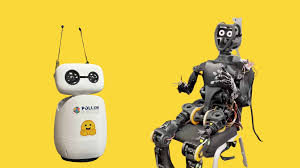
Desktop and personal robotics represent the fastest-growing segment within this market, with a projected compound annual growth rate (CAGR) of 42% through 2027. Products like the Reachy Mini are driving this expansion by making sophisticated robotic capabilities accessible to consumers, educators, and small businesses at price points previously unimaginable.
AI Integration Reaches New Depths
The integration of large language models (LLMs) and computer vision systems into robotic platforms has created a paradigm shift in robot capabilities. Modern robots are no longer limited to programmed responses; they can understand context, engage in natural conversations, and adapt to unexpected situations with human-like reasoning.
This AI revolution is particularly evident in desktop robotics, where platforms now offer seamless integration with cloud-based AI services. Robots can access millions of pre-trained models, enabling instant deployment of sophisticated behaviors without requiring extensive local processing power. The result is intelligent systems that can learn, adapt, and evolve their capabilities over time.
Open Source Movement Transforms Development
The open-source robotics ecosystem has reached a tipping point in 2025, with collaborative development models accelerating innovation at unprecedented rates. Major robotics platforms are embracing transparency, releasing hardware designs, software frameworks, and training data to global communities of developers.
This shift has democratized robotics development, enabling rapid prototyping and deployment of new applications. Educational institutions, research organizations, and individual developers can now contribute to and benefit from shared knowledge bases, creating a virtuous cycle of innovation that benefits the entire industry.
Miniaturization Meets Capability
One of the most significant trends in 2025 is the successful miniaturization of complex robotics systems without sacrificing capability. Advanced manufacturing techniques, improved battery technologies, and more efficient processors have enabled the creation of compact robots that rival their larger counterparts in functionality.
Desktop robots now incorporate sophisticated sensor arrays, including high-resolution cameras, multi-directional microphones, and precision actuators, all within form factors that fit comfortably on a desk. This miniaturization trend is opening new markets and use cases that were previously impractical due to size and cost constraints.
Edge Computing Revolutionizes Response Times
The integration of powerful edge computing capabilities directly into robotic systems has eliminated many of the latency issues that previously limited real-time applications. Modern robots can process complex AI workloads locally, enabling immediate responses to environmental changes and user interactions.
This local processing capability is particularly important for applications requiring split-second decision-making, such as safety monitoring, interactive education, and real-time collaboration. The combination of local intelligence and cloud connectivity creates hybrid systems that offer both immediate responsiveness and access to vast knowledge bases.
Industry-Specific Applications Proliferate
2025 has witnessed the emergence of highly specialized robotic solutions tailored to specific industry needs. Healthcare robots assist with patient monitoring and medication management, while educational robots provide personalized learning experiences adapted to individual student needs.
In the business sector, desktop robots are increasingly deployed as digital assistants, handling routine tasks such as scheduling, data analysis, and customer service inquiries. These specialized applications demonstrate the maturity of the robotics industry and its ability to deliver targeted solutions for specific market segments.
Sustainability Becomes a Priority
Environmental consciousness is driving significant changes in robotics design and manufacturing. Companies are prioritizing sustainable materials, energy-efficient operations, and end-of-life recyclability in their product development processes.
This trend extends to robot functionality, with many systems designed to help users reduce their environmental impact through energy monitoring, waste reduction guidance, and sustainable practice recommendations. The robotics industry is positioning itself as part of the solution to global sustainability challenges.
Human-Robot Collaboration Evolves
The relationship between humans and robots is evolving from one of human command and robot execution to true collaboration. Advanced natural language processing capabilities enable robots to understand nuanced instructions, ask clarifying questions, and provide intelligent suggestions.
This collaborative approach is transforming workflows across industries, with robots serving as intelligent partners rather than simple tools. The result is increased productivity, reduced human fatigue, and more engaging work experiences that leverage the unique strengths of both humans and machines.
Security and Privacy Take Center Stage
As robots become more integrated into daily life and business operations, security and privacy considerations have become paramount. The industry is implementing robust encryption protocols, secure authentication systems, and privacy-preserving AI techniques to protect user data and prevent unauthorized access.
Regulatory frameworks are also evolving to address the unique challenges posed by intelligent robotic systems, with new standards emerging for data protection, operational safety, and ethical AI use in robotics applications.
Investment and Market Dynamics
Venture capital investment in robotics startups reached record levels in 2025, with over $12 billion invested in the first quarter alone. This influx of capital is funding breakthrough research in areas such as advanced materials, quantum computing applications, and bio-inspired robotics.
The competitive landscape is becoming increasingly diverse, with traditional technology giants facing competition from specialized robotics companies, open-source communities, and innovative startups. This diversity is driving rapid innovation and ensuring a continuous stream of new products and capabilities.
Looking Ahead: The Next Frontier
As we progress through 2025, several emerging trends are poised to shape the future of robotics. Quantum computing integration promises to unlock new levels of computational capability, while advances in materials science are enabling new forms of robot embodiment and environmental interaction.
The convergence of robotics with other emerging technologies, such as augmented reality, blockchain, and advanced biotechnology, is creating new possibilities that were previously the realm of science fiction. These intersections represent the next frontier of robotic innovation and market expansion.
Conclusion
The robotics industry in 2025 is characterized by unprecedented growth, technological convergence, and expanding market opportunities. The combination of advanced AI capabilities, accessible hardware platforms, and collaborative development models has created conditions for sustained innovation and market expansion.
For businesses, educators, and individual users, this represents an opportune time to engage with robotic technologies. The barriers to entry have never been lower, while the potential for impact and innovation has never been higher. As we continue through 2025, the robotics industry will undoubtedly continue to surprise and delight with new capabilities, applications, and possibilities that reshape our relationship with intelligent machines.