Understanding the Basics: What Makes a Robot "Smart"?
Before diving into construction, it's essential to understand what transforms a mechanical device into an intelligent robot. At its core, an AI robot combines three fundamental elements: sensing (perceiving the environment), thinking (processing information and making decisions), and acting (responding to its environment through movement or communication).
Modern AI robots leverage machine learning algorithms, computer vision, natural language processing, and sensor fusion to create systems that can learn, adapt, and interact naturally with their environment. The key is starting with a platform that makes these complex technologies accessible to beginners.
Choosing Your First Robot Platform
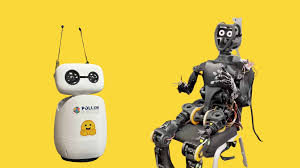
For beginners, selecting the right platform is crucial to success and long-term engagement. Desktop robots like the Reachy Mini offer several advantages: they're compact, affordable, come with comprehensive software support, and provide access to advanced AI capabilities without requiring extensive technical expertise.
When evaluating platforms, consider factors such as programming language support, community resources, expandability, and the availability of educational materials. Python-based platforms are particularly beginner-friendly due to the language's readability and extensive AI/ML library ecosystem.
Essential Components and Their Functions
Understanding the core components of your AI robot helps demystify the technology and enables more effective troubleshooting and customization. The brain of your robot is typically a single-board computer like the Raspberry Pi, which handles all computational tasks from basic movement control to complex AI processing.
Sensors serve as your robot's sensory organs. Cameras provide visual input for computer vision applications, microphones enable voice interaction, and various environmental sensors (temperature, humidity, motion) allow the robot to understand its surroundings. Actuators, including motors and servos, enable your robot to move and interact with objects.
Setting Up Your Development Environment
A well-configured development environment is essential for productive robot programming. Start by installing Python and essential libraries such as OpenCV for computer vision, NumPy for numerical computations, and TensorFlow or PyTorch for machine learning applications.
Modern robot platforms often provide integrated development environments (IDEs) or web-based interfaces that simplify the programming process. These tools typically include code editors, debugging capabilities, and direct hardware control interfaces that make it easy to test and refine your programs.
Your First Program: Making Your Robot Come Alive
Begin with simple programs that demonstrate basic functionality. A "Hello World" equivalent for robotics might involve making your robot turn its head, play a sound, or respond to a voice command. These initial successes build confidence and provide a foundation for more complex behaviors.
Start with pre-written example programs to understand the basic structure and syntax. Most platforms provide sample code for common tasks like face detection, voice recognition, and object tracking. Study these examples, modify them, and gradually work toward creating your own unique programs.
Implementing Basic AI Behaviors
Once you're comfortable with basic programming, you can begin implementing AI behaviors. Face tracking is an excellent starting point—it combines computer vision with motor control to create engaging interactions. The robot uses its camera to detect faces and moves its head to follow people around the room.
Voice interaction adds another dimension to your robot's personality. Modern platforms often integrate with cloud-based AI services, allowing your robot to understand natural language commands and respond with synthesized speech. This creates the foundation for more sophisticated conversational AI applications.
Exploring Machine Learning Integration
Machine learning transforms static programs into adaptive systems that improve over time. Begin with pre-trained models for common tasks like image classification, object detection, or sentiment analysis. Platforms like Hugging Face provide access to thousands of ready-to-use models that can be integrated with minimal code.
As you gain experience, you can experiment with training custom models for specific applications. Transfer learning techniques allow you to adapt existing models to new tasks with relatively small datasets, making machine learning accessible even to beginners.
Creating Interactive Behaviors
Interactive behaviors showcase your robot's intelligence and create engaging experiences for users. Design behaviors that respond to environmental changes, user actions, or time-based events. For example, your robot might greet people differently based on the time of day or react to changes in ambient light levels.
Consider implementing multi-modal interactions that combine visual, auditory, and movement responses. A robot that can simultaneously track a speaker, respond verbally, and use body language creates much more engaging interactions than single-mode responses.
Debugging and Troubleshooting
Debugging robotic systems presents unique challenges because you're working with both software and hardware components. Develop systematic approaches to isolate problems: test hardware components individually, use logging to track program execution, and leverage simulation tools when available.
Common issues include sensor calibration problems, network connectivity issues, and resource constraints. Understanding these typical failure modes helps you diagnose and resolve problems more efficiently. Many platforms provide diagnostic tools and active community forums where you can seek help with specific issues.
Safety and Best Practices
Safety should always be a priority in robotics projects. Even desktop robots can cause injury if programmed incorrectly or if hardware malfunctions. Implement software safety limits for movement ranges, include emergency stop functionality, and always test new behaviors in controlled environments.
Follow software engineering best practices: use version control for your code, write clear documentation, and structure your programs modularly. These practices become increasingly important as your projects grow in complexity and when you want to share your work with others.
Building a Learning Community
The robotics community is generally welcoming and supportive of newcomers. Join online forums, attend local maker spaces, and participate in robotics competitions or hackathons. Sharing your projects and learning from others accelerates your development and keeps you motivated during challenging phases.
Consider documenting your projects through blogs, videos, or social media. Teaching others reinforces your own learning and contributes to the broader robotics community. Many successful roboticists started by sharing their beginner projects and building audiences around their learning journeys.
Expanding Your Skills
Once you've mastered basic AI robot programming, numerous paths for advancement await. You might specialize in computer vision, natural language processing, or autonomous navigation. Each area offers deep technical challenges and rewarding applications.
Consider pursuing formal education in robotics, computer science, or related fields. While not strictly necessary for hobbyist pursuits, structured learning can accelerate your progress and open doors to professional opportunities in the rapidly growing robotics industry.
Project Ideas for Continued Learning
Practical projects provide excellent learning opportunities and demonstrate your growing skills. Consider building a personal assistant robot that manages your calendar and reminds you of appointments, a pet monitoring system that tracks your cat's activities, or an educational robot that helps children learn languages through interactive games.
Each project teaches different aspects of robotics and AI while solving real-world problems. Start small and gradually increase complexity as your skills develop. The key is maintaining momentum through regular engagement with challenging but achievable goals.
Looking Forward: The Future of Personal Robotics
As you begin your robotics journey, you're entering a field experiencing rapid transformation. Advances in AI, decreasing hardware costs, and growing community support are making sophisticated robotics accessible to ever-broader audiences.
Your beginner projects today might inspire tomorrow's breakthrough applications. The democratization of robotics means that innovation can come from anywhere, and your unique perspective and creativity could contribute to the field's future direction.
Conclusion
Building your first AI robot is an exciting milestone that opens doors to a world of creative and technical possibilities. While the learning curve can be steep, modern platforms, extensive online resources, and supportive communities make the journey more accessible than ever before.
Remember that every expert was once a beginner, and every complex robot started with simple movements and basic programs. Embrace the learning process, celebrate small victories, and don't be afraid to experiment and make mistakes. Your first AI robot is just the beginning of an exciting journey into the future of human-machine interaction.