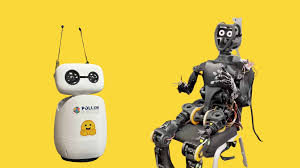
The Foundation of Robotic Vision
Robotic vision systems represent the intersection of computer vision, machine learning, and robotics engineering. These systems enable robots to extract meaningful information from visual data, transforming raw pixel values into actionable insights that guide decision-making and behavior. The evolution from traditional rule-based image processing to machine learning-driven approaches has revolutionized what robots can see, understand, and accomplish.
Modern robotic vision systems leverage deep learning architectures that can automatically learn complex visual patterns from data, eliminating the need for hand-crafted features that characterized earlier approaches. This shift has enabled robots to handle the complexity and variability of real-world visual environments with unprecedented accuracy and robustness.
Convolutional Neural Networks: The Workhorse of Robot Vision
Convolutional Neural Networks (CNNs) form the backbone of most modern robotic vision systems. These architectures are specifically designed to process grid-like data such as images, using learned filters to detect features at multiple scales and levels of abstraction. For robotic applications, CNNs excel at tasks ranging from basic object detection to complex scene understanding.
The hierarchical nature of CNNs mirrors human visual processing, with early layers detecting simple features like edges and textures, while deeper layers combine these into complex object representations. This architecture makes CNNs particularly well-suited for robotic applications where understanding both local details and global context is crucial for effective navigation and manipulation.
Object Detection and Recognition in Robotics
Object detection serves as a fundamental capability for most robotic applications, enabling robots to identify and locate specific items in their environment. Modern architectures like YOLO (You Only Look Once), R-CNN variants, and EfficientDet provide real-time performance suitable for robotic control loops while maintaining high accuracy across diverse object categories.
For desktop robots like the Reachy Mini, object detection enables applications such as interactive games, educational demonstrations, and basic manipulation tasks. The integration of pre-trained models through platforms like Hugging Face allows rapid deployment of sophisticated detection capabilities without requiring extensive training data or computational resources.
Semantic Segmentation for Detailed Scene Understanding
While object detection identifies and locates objects, semantic segmentation provides pixel-level understanding of visual scenes. This capability is crucial for robotic applications requiring precise spatial reasoning, such as navigation planning, obstacle avoidance, and fine manipulation tasks.
Architectures like U-Net, DeepLab, and Mask R-CNN enable robots to understand not just what objects are present, but their exact boundaries and spatial relationships. This detailed understanding supports more sophisticated robotic behaviors and enables operation in complex, cluttered environments that would challenge simpler vision systems.
Real-Time Processing Considerations
Robotic applications impose strict timing constraints on vision systems, typically requiring processing rates of 10-30 frames per second for smooth operation. This requirement has driven the development of efficient architectures and optimization techniques that maintain accuracy while meeting real-time performance demands.
Edge computing solutions and specialized hardware like neural processing units (NPUs) enable deployment of sophisticated vision models on resource-constrained robotic platforms. Techniques such as model pruning, quantization, and knowledge distillation further reduce computational requirements while preserving essential functionality.
Transfer Learning and Pre-trained Models
The availability of large-scale pre-trained models has dramatically reduced the barrier to entry for implementing sophisticated vision capabilities in robotic systems. Models trained on massive datasets like ImageNet provide strong feature representations that can be fine-tuned for specific robotic applications with minimal additional training data.
This approach is particularly valuable for educational and research robotics, where limited resources and expertise might otherwise prevent implementation of state-of-the-art vision capabilities. Platforms like Hugging Face provide easy access to thousands of pre-trained models that can be integrated into robotic systems with minimal coding effort.
Multi-Modal Vision Systems
Advanced robotic vision systems often combine multiple sensing modalities to create richer environmental understanding. RGB-D cameras provide both color and depth information, enabling more accurate object localization and 3D scene reconstruction. Stereo vision systems use multiple cameras to extract depth information through triangulation.
These multi-modal approaches are particularly valuable for manipulation tasks where understanding object geometry and spatial relationships is crucial. The fusion of different sensor types provides redundancy and improved robustness compared to single-modality systems.
Active Vision and Attention Mechanisms
Unlike passive computer vision systems, robotic vision can actively control camera positioning and parameters to optimize visual information gathering. This active vision approach enables robots to focus attention on relevant regions, adjust viewing angles for better recognition, and adapt to changing lighting conditions.
Attention mechanisms in neural networks provide computational analogies to biological attention systems, enabling models to focus processing resources on the most informative regions of visual input. This approach improves both accuracy and efficiency in robotic vision systems.
Handling Visual Variability and Robustness
Real-world robotic applications must handle significant variability in lighting conditions, viewpoints, occlusions, and environmental factors. Data augmentation techniques during training help improve model robustness by exposing networks to diverse visual conditions they might encounter during deployment.
Techniques such as domain adaptation and few-shot learning enable vision systems to quickly adapt to new environments or object categories with minimal additional training. This adaptability is crucial for robotic systems that must operate across diverse settings and applications.
3D Vision and Spatial Reasoning
Many robotic applications require understanding of 3D geometry and spatial relationships. Techniques such as Structure from Motion (SfM), simultaneous localization and mapping (SLAM), and 3D object detection enable robots to build comprehensive spatial models of their environment.
Neural networks designed for 3D data processing, including PointNet for point clouds and 3D CNNs for volumetric data, enable sophisticated spatial reasoning capabilities. These approaches support advanced robotic applications such as autonomous navigation, 3D manipulation, and augmented reality interactions.
Vision-Language Integration
The integration of vision and language processing capabilities enables robots to understand and respond to natural language descriptions of visual scenes. Models like CLIP (Contrastive Language-Image Pre-training) create shared representations between visual and textual information, enabling robots to perform tasks described in natural language.
This capability opens new possibilities for human-robot interaction, allowing users to describe objects or tasks using natural language rather than pre-programmed commands. Such systems are particularly valuable for educational and assistive robotics applications.
Continuous Learning and Adaptation
Robotic vision systems benefit from continuous learning approaches that enable adaptation to new environments and tasks during deployment. Online learning techniques allow models to update their understanding based on new experiences while avoiding catastrophic forgetting of previously learned capabilities.
This adaptability is crucial for long-term robotic deployment where environmental conditions, object appearances, or task requirements may change over time. Continual learning ensures that vision systems remain effective throughout extended operational periods.
Privacy and Edge Computing Considerations
Privacy concerns surrounding visual data processing have driven increased interest in edge computing solutions that process visual information locally rather than transmitting it to cloud services. This approach provides both privacy protection and reduced latency for real-time robotic applications.
Federated learning approaches enable model improvement across multiple robotic deployments while keeping sensitive visual data local to individual systems. These techniques support privacy-preserving advancement of robotic vision capabilities.
Evaluation Metrics and Validation
Proper evaluation of robotic vision systems requires metrics that reflect real-world performance requirements. Traditional computer vision metrics like accuracy and precision must be supplemented with measures of robustness, real-time performance, and task-specific effectiveness.
Simulation environments provide controlled testing conditions for vision system validation, while real-world deployment requires careful monitoring and continuous assessment to ensure maintained performance across diverse operating conditions.
Future Directions and Emerging Trends
The future of robotic vision is being shaped by advances in transformer architectures, self-supervised learning, and neuro-symbolic reasoning. These approaches promise more efficient, robust, and interpretable vision systems that can better understand and reason about visual information.
Integration with large language models is enabling new forms of visual reasoning and explanation, while advances in few-shot learning reduce the data requirements for adapting vision systems to new tasks and environments.
Conclusion
Machine learning has transformed robotic vision from a specialized technical challenge to an accessible capability that can be deployed across diverse applications. The combination of powerful pre-trained models, efficient inference hardware, and user-friendly development platforms has democratized access to sophisticated vision capabilities.
As these technologies continue to evolve, we can expect even more powerful and accessible vision systems that will enable new forms of human-robot interaction and autonomous behavior. The key to successful implementation lies in understanding the capabilities and limitations of different approaches and selecting appropriate techniques for specific robotic applications and constraints.