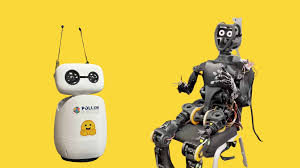
Evolution of Human-Robot Interface Paradigms
Traditional human-robot interfaces have relied heavily on explicit programming, command-line interfaces, or simple graphical user interfaces that require specialized knowledge and create barriers to widespread adoption. The next generation of interfaces focuses on leveraging natural human communication modalities to create more intuitive and accessible interaction paradigms.
These advanced interfaces represent a fundamental shift from human-to-machine translation toward machine understanding of human intent, emotion, and context. This evolution enables robots to become true collaborative partners rather than simply programmable tools, transforming how we conceive of human-robot relationships.
Gesture-Based Control Systems
Computer vision advances have enabled sophisticated gesture recognition systems that can interpret human hand movements, body language, and facial expressions as control inputs. These systems allow users to direct robot actions through natural movements, making interaction more intuitive and reducing the learning curve for new users.
Advanced gesture recognition goes beyond simple pointing and waving to interpret complex movements, hand shapes, and sequential gestures that can convey detailed instructions. Machine learning algorithms continuously improve gesture recognition accuracy while adapting to individual user patterns and preferences.
Brain-Computer Interface Integration
Brain-computer interfaces (BCIs) represent the ultimate in direct human-robot communication, enabling control through thought patterns and neural signals. While still in early development stages, BCI technology promises to enable intuitive robot control for users with physical limitations and unprecedented bandwidth for human-robot communication.
Current BCI implementations focus on simple control commands and navigation instructions, but advancing technology suggests future possibilities for complex task communication and even emotional state sharing between humans and robots. This technology has particular promise for assistive robotics applications.
Augmented Reality and Mixed Reality Interfaces
Augmented reality (AR) interfaces overlay digital information onto the physical world, creating rich contexts for human-robot interaction. Users can visualize robot sensor data, planned actions, and system status directly in their physical environment, enabling more informed and effective collaboration.
Mixed reality environments enable humans and robots to share virtual objects and spaces, supporting collaborative design, planning, and problem-solving activities. These shared virtual spaces can persist across sessions, enabling long-term collaborative projects and knowledge building.
Natural Language and Conversational Interfaces
Advanced natural language processing enables robots to understand and respond to complex verbal instructions, questions, and requests. Modern conversational interfaces can maintain context across extended dialogues, understand implicit references, and even engage in creative problem-solving discussions.
Multimodal conversational systems combine speech recognition, natural language understanding, and contextual awareness to create fluid, natural communication experiences. These systems can handle ambiguous instructions, ask clarifying questions, and provide explanations of their actions and reasoning.
Haptic Feedback and Force Interfaces
Haptic interfaces provide tactile feedback that enables users to "feel" virtual objects and robot interactions. Force feedback systems allow users to guide robot movements through physical interaction, creating intuitive control experiences for manipulation tasks.
Advanced haptic systems can simulate different textures, weights, and material properties, enabling rich interaction experiences that complement visual and auditory feedback. These interfaces are particularly valuable for remote operation and training applications where physical presence is important.
Eye Tracking and Gaze-Based Control
Eye tracking technology enables robots to understand user attention and intent through gaze patterns. This capability supports hands-free control where users can select objects or direct robot attention through eye movements, particularly valuable for accessibility applications.
Gaze-based interfaces can provide subtle, non-intrusive control that complements other interaction modalities. Combined with machine learning, these systems can predict user intent and proactively assist with tasks based on attention patterns and visual behavior.
Emotional Recognition and Affective Computing
Advanced interface systems incorporate emotional recognition capabilities that enable robots to understand and respond to human emotional states. Facial expression analysis, voice tone interpretation, and physiological monitoring create emotionally aware interaction systems.
Affective computing enables robots to adapt their behavior, communication style, and assistance level based on detected user emotions. This capability creates more supportive and engaging interaction experiences while respecting user privacy and emotional boundaries.
Multimodal Integration and Fusion
The most powerful next-generation interfaces combine multiple input modalities to create robust, flexible interaction systems. Multimodal fusion algorithms integrate information from voice, gesture, gaze, and environmental context to understand user intent more accurately than any single modality could achieve.
Adaptive multimodal systems can dynamically adjust their interaction approaches based on user preferences, environmental conditions, and task requirements. This flexibility ensures optimal interaction experiences across diverse contexts and user needs.
Context-Aware Intelligent Assistance
Context-aware interfaces understand not just what users are trying to accomplish, but also their current situation, capabilities, and constraints. This understanding enables proactive assistance that anticipates needs and provides appropriate support without explicit requests.
Environmental sensors, user modeling, and predictive analytics combine to create interface systems that adapt to changing circumstances and learn from interaction patterns over time. This adaptation creates increasingly personalized and effective assistance experiences.
Collaborative Programming and Teaching
Next-generation interfaces enable users to teach robots new behaviors through demonstration, example, and collaborative refinement. These programming by demonstration systems allow non-technical users to extend robot capabilities without traditional coding skills.
Interactive teaching interfaces support iterative improvement of robot behaviors through user feedback, correction, and guidance. This collaborative approach to robot programming makes customization accessible to broader user communities while maintaining sophisticated functionality.
Accessibility and Inclusive Design
Advanced interfaces prioritize accessibility and inclusive design to ensure that robotic systems are usable by people with diverse abilities and needs. Multiple interaction modalities provide alternative access methods that accommodate different physical and cognitive capabilities.
Universal design principles guide the development of interfaces that are inherently accessible rather than requiring special accommodations. This approach benefits all users while ensuring that advanced robotics technology remains available to everyone regardless of their individual capabilities.
Privacy and Security in Advanced Interfaces
Sophisticated interface technologies collect detailed information about user behavior, preferences, and even thoughts or emotions. Protecting this sensitive information requires advanced privacy-preserving technologies and careful system design that minimizes data collection while maintaining functionality.
Security considerations include protecting against unauthorized access to interface systems, preventing manipulation of user interactions, and ensuring that sensitive biometric or neural data cannot be intercepted or misused. These protections are essential for building user trust in advanced interface technologies.
Training and Adaptation Systems
Next-generation interfaces include sophisticated training and adaptation systems that help users develop proficiency with new interaction modalities while simultaneously adapting to individual user patterns and preferences.
Personalized training programs guide users through interface capabilities, provide practice opportunities, and adapt to individual learning patterns. These systems ensure that advanced interface capabilities remain accessible to users with varying technical backgrounds and experience levels.
Real-Time Performance and Responsiveness
Natural interaction requires real-time responsiveness that matches human communication and reaction times. Advanced processing architectures, edge computing, and optimized algorithms ensure that sophisticated interface systems maintain the responsiveness necessary for natural interaction experiences.
Predictive processing and anticipatory interfaces can begin preparing responses before user intent is fully determined, reducing perceived latency and creating more fluid interaction experiences. These optimizations are crucial for maintaining the illusion of natural communication.
Cultural Adaptation and Localization
Interface systems deployed across diverse cultural contexts must adapt to different communication styles, social norms, and interaction preferences. Cultural adaptation goes beyond language translation to encompass gesture meanings, personal space expectations, and interaction protocols.
Localization systems can adapt interface behaviors to match regional preferences while maintaining core functionality. This adaptation ensures that advanced interface technologies are culturally appropriate and effective across global deployment contexts.
Future Directions and Emerging Technologies
Emerging interface technologies include direct neural interfaces, quantum-enhanced sensing systems, and holographic displays that promise even more natural and powerful interaction capabilities. These technologies represent the next frontier in human-robot interface development.
Integration with other emerging technologies like 5G networks, edge AI computing, and advanced materials will enable new interface capabilities that are currently difficult to imagine. The future of human-robot interfaces will likely be characterized by seamless, invisible interaction that feels as natural as human-to-human communication.
Implementation Challenges and Solutions
Deploying next-generation interface technologies requires addressing significant technical challenges including sensor accuracy, processing latency, power consumption, and system reliability. Practical solutions must balance sophistication with robustness and cost-effectiveness.
Development frameworks and tools that simplify the creation of advanced interface systems will be crucial for widespread adoption. These tools must enable developers to create sophisticated interfaces without requiring deep expertise in every underlying technology.
Conclusion
Next-generation human-robot interfaces represent a fundamental transformation in how humans and machines interact, moving from explicit programming toward natural, intuitive communication. These advances promise to make robotic technology accessible to broader populations while enabling more sophisticated and effective human-robot collaboration.
The future of human-robot interfaces will be characterized by seamless integration of multiple interaction modalities, deep understanding of human intent and emotion, and adaptive systems that continuously improve through use. These developments will transform robots from tools that require specialized knowledge to collaborative partners that enhance human capabilities across diverse applications and contexts.