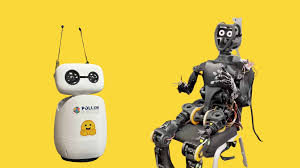
The Evolution of Robot Speech Technology
Voice recognition in robotics has evolved from simple command recognition systems to sophisticated conversational AI platforms capable of understanding natural speech patterns, context, and user intent. This transformation enables more intuitive human-robot interactions that feel natural and engaging rather than mechanical and constrained.
Modern desktop robots like the Reachy Mini incorporate advanced speech processing pipelines that combine automatic speech recognition (ASR), natural language understanding (NLU), and text-to-speech synthesis (TTS) to create seamless conversational experiences. These systems can handle multiple speakers, background noise, and complex linguistic constructs.
Automatic Speech Recognition Architecture
Contemporary ASR systems in desktop robots employ deep neural networks trained on massive speech datasets to achieve human-level accuracy in controlled environments. These systems use attention mechanisms and transformer architectures to better handle long-range dependencies and contextual information in speech signals.
Edge computing capabilities allow desktop robots to perform speech recognition locally, reducing latency and protecting user privacy while maintaining high accuracy. Hybrid approaches combine local processing for common commands with cloud-based processing for complex or uncommon utterances.
Natural Language Understanding and Intent Recognition
Beyond recognizing words, modern desktop robots must understand meaning, context, and user intent. Advanced NLU systems use large language models fine-tuned for robotic applications to interpret user requests, extract relevant parameters, and determine appropriate responses or actions.
Intent classification systems enable robots to understand when users are making requests, asking questions, providing information, or engaging in casual conversation. This understanding allows robots to respond appropriately and maintain natural dialogue flow.
Contextual Awareness and Dialogue Management
Sophisticated dialogue management systems enable desktop robots to maintain context across multi-turn conversations, remember previous interactions, and understand references to earlier parts of the conversation. This capability creates more natural and efficient interactions.
Context tracking involves maintaining representations of the current conversation state, user preferences, and environmental information. These systems can resolve ambiguous references, handle interruptions, and manage complex multi-topic conversations.
Multi-Modal Speech Processing
Advanced desktop robots integrate speech processing with visual and gesture recognition to create comprehensive understanding systems. Visual lip reading capabilities can improve speech recognition accuracy in noisy environments, while gesture recognition provides additional communication channels.
Facial expression analysis combined with voice tone analysis enables robots to understand emotional context and respond appropriately to user mood and intent. This multi-modal approach creates more empathetic and effective communication.
Noise Robustness and Audio Enhancement
Real-world environments present significant challenges for speech recognition systems including background noise, reverberation, and multiple speakers. Advanced audio processing techniques including beamforming, noise suppression, and acoustic echo cancellation enable robust performance in challenging conditions.
Machine learning-based audio enhancement systems can learn to filter out specific types of noise while preserving speech clarity. These systems continuously adapt to changing acoustic environments to maintain optimal performance.
Speaker Recognition and Personalization
Modern desktop robots incorporate speaker recognition capabilities that enable personalized interactions based on individual user identities. Voice biometric systems can identify users and adapt language models, response styles, and available functions accordingly.
Personalization extends to vocabulary adaptation, response preferences, and interaction patterns. Robots can learn individual user speaking styles, common phrases, and preferred interaction modes to provide increasingly customized experiences.
Real-Time Processing and Latency Optimization
Interactive speech applications require minimal latency between user input and robot response. Advanced processing architectures use streaming recognition, incremental parsing, and predictive response generation to minimize perceived delay.
Edge computing and specialized hardware acceleration enable real-time processing of complex speech and language models. These optimizations are crucial for maintaining natural conversation flow and user engagement.
Multilingual and Cross-Cultural Communication
Global deployment of desktop robots requires sophisticated multilingual capabilities including language detection, code-switching handling, and cultural adaptation. Advanced systems can seamlessly switch between languages within conversations and adapt to regional dialects and accents.
Cross-cultural communication involves more than language translation, requiring understanding of cultural contexts, communication styles, and social norms. These capabilities enable robots to provide appropriate and respectful interactions across diverse user populations.
Privacy and Security in Speech Processing
Speech processing systems handle highly sensitive personal information requiring robust privacy and security protections. Advanced systems use techniques like federated learning, differential privacy, and on-device processing to protect user data while maintaining functionality.
Secure speech processing involves encryption of audio data, secure model storage, and privacy-preserving inference techniques. These protections are essential for building user trust and meeting regulatory requirements.
Emotional Intelligence and Sentiment Analysis
Advanced speech processing systems can analyze vocal characteristics to understand user emotional states and respond appropriately. Prosodic analysis, speaking rate changes, and vocal tension patterns provide insights into user feelings and intentions.
Emotional adaptation enables robots to modify their response style, tone, and approach based on detected user emotions. This capability creates more empathetic and effective interactions that feel more natural and supportive.
Integration with Large Language Models
The integration of large language models with speech processing systems has revolutionized robot conversational capabilities. These models provide sophisticated reasoning, knowledge access, and response generation capabilities that enable more helpful and engaging interactions.
Fine-tuning approaches adapt general-purpose language models for specific robotic applications while maintaining broad conversational capabilities. This balance enables robots to be both knowledgeable assistants and specialized tools.
Voice Synthesis and Response Generation
Natural-sounding speech synthesis is crucial for creating engaging robot personalities. Advanced neural text-to-speech systems can generate expressive, natural-sounding speech with appropriate intonation, emotion, and speaking style.
Parametric voice synthesis enables robots to adapt their speaking characteristics to match user preferences or situational requirements. These systems can modulate speaking rate, pitch, and style to optimize communication effectiveness.
Continuous Learning and Adaptation
Speech processing systems in desktop robots benefit from continuous learning approaches that adapt to individual users and environments over time. Online learning techniques enable improvement of recognition accuracy and response appropriateness based on usage patterns.
Federated learning approaches enable model improvements across robot deployments while preserving individual privacy. These techniques ensure that speech processing capabilities continue to improve through collective learning experiences.
Development Tools and Frameworks
Creating sophisticated speech processing systems requires comprehensive development tools and frameworks. Modern platforms provide pre-built components for ASR, NLU, dialogue management, and TTS that can be customized for specific applications.
Cloud-based development environments enable rapid prototyping and testing of speech processing capabilities. These tools lower the barrier to entry for developing conversational robot applications while maintaining professional-grade functionality.
Performance Evaluation and Optimization
Evaluating speech processing system performance requires comprehensive metrics covering accuracy, latency, naturalness, and user satisfaction. Advanced testing frameworks simulate diverse acoustic conditions and user interaction patterns to ensure robust performance.
Continuous optimization involves monitoring system performance in deployment, identifying improvement opportunities, and implementing updates to maintain optimal functionality. These processes are essential for long-term system success.
Future Directions and Emerging Technologies
The future of robot speech processing includes advances in zero-shot learning, few-shot adaptation, and cross-modal understanding. These developments promise more flexible and capable systems that can quickly adapt to new users, environments, and tasks.
Emerging technologies like brain-computer interfaces and advanced neural architectures may enable even more natural and efficient communication between humans and robots. These advances suggest increasingly seamless integration of speech technology in robotic systems.
Conclusion
Voice recognition and natural language processing technologies have transformed desktop robots from command-driven tools into conversational partners capable of natural, contextual communication. These advances enable more intuitive, efficient, and engaging human-robot interactions.
As these technologies continue to evolve, we can expect even more sophisticated capabilities including better emotional understanding, cross-cultural communication, and adaptive personalization. The future of robot speech technology promises to make human-robot communication as natural and effective as human-human conversation.