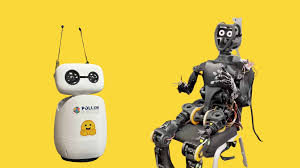
The Educational Robotics Revolution
Educational robotics has evolved from a niche technical subject to a mainstream pedagogical tool that fundamentally transforms how students engage with STEM concepts. This transformation is driven by the recognition that traditional lecture-based teaching methods often fail to capture student interest and develop the practical skills needed in our increasingly digital world.
Modern educational robots like the Reachy Mini provide students with tangible, interactive learning experiences that make abstract concepts concrete. When students program a robot to navigate obstacles, they're not just learning coding—they're applying physics principles, mathematical calculations, and engineering problem-solving in real-time contexts that demonstrate immediate cause-and-effect relationships.
Enhancing Student Engagement Through Hands-On Learning
The tactile nature of robotics creates a multisensory learning environment that appeals to different learning styles and maintains student attention far more effectively than traditional methods. Students who struggle with theoretical concepts often excel when they can see their code come to life through robotic movement and behavior.
This engagement extends beyond mere entertainment value. Research consistently shows that students working with educational robots demonstrate increased motivation to pursue STEM subjects, improved attendance rates, and higher retention of complex concepts. The immediate feedback provided by robotic systems helps students understand the consequences of their programming decisions, accelerating the learning process.
Developing Critical Thinking and Problem-Solving Skills
Robotics education naturally incorporates iterative design thinking processes that mirror real-world engineering and scientific methodology. Students formulate hypotheses about how their robot will behave, test their assumptions through experimentation, analyze results, and refine their approaches based on observed outcomes.
This process develops metacognitive skills—learning how to learn—that extend far beyond robotics applications. Students become comfortable with failure as a learning opportunity, develop persistence when facing challenges, and learn to break complex problems into manageable components. These skills prove invaluable across all academic disciplines and future career paths.
Bridging Theoretical Knowledge with Practical Application
Traditional STEM education often struggles to demonstrate the real-world relevance of abstract concepts. Robotics provides concrete contexts where mathematical formulas, physics principles, and programming concepts have immediate practical applications. Students calculating trajectories for robot movement gain intuitive understanding of physics that purely theoretical approaches rarely achieve.
This bridge between theory and practice helps students see the interconnectedness of STEM disciplines. A single robotics project might involve mathematical calculations for movement planning, physics concepts for understanding sensor behavior, engineering principles for mechanical design, and computer science skills for programming control systems.
Fostering Collaborative Learning and Communication
Robotics projects naturally lend themselves to collaborative learning environments where students work in teams to solve complex challenges. This collaboration mirrors real-world STEM careers where interdisciplinary teamwork is essential for success. Students learn to communicate technical concepts, divide responsibilities, and integrate diverse perspectives into unified solutions.
Team-based robotics activities develop soft skills that are increasingly valuable in STEM careers: leadership, communication, project management, and conflict resolution. Students learn to articulate their ideas clearly, listen to others' perspectives, and negotiate solutions that leverage team members' diverse strengths.
Adapting to Different Age Groups and Skill Levels
Modern educational robotics platforms support learning across age ranges and skill levels through progressive complexity and multiple interface options. Young students might use visual programming languages with drag-and-drop interfaces, while advanced students can implement complex algorithms using traditional programming languages like Python.
This scalability ensures that robotics education can grow with students, providing appropriate challenges at each developmental stage. Elementary students might focus on basic programming concepts and sensor understanding, while high school students can tackle advanced topics like machine learning, computer vision, and autonomous navigation systems.
Preparing Students for Future Careers
The skills developed through robotics education align closely with workforce demands in our increasingly automated economy. Students gain experience with programming, data analysis, system design, and human-machine interaction—capabilities that are valuable across numerous career paths, not just traditional engineering roles.
Beyond technical skills, robotics education develops the adaptability and continuous learning mindset essential for success in rapidly evolving technological landscapes. Students become comfortable with emerging technologies and confident in their ability to master new tools and concepts as they emerge.
Implementation Strategies for Educational Institutions
Successful robotics programs require thoughtful planning and implementation strategies that consider available resources, teacher training needs, and curriculum integration requirements. Schools should start with pilot programs to demonstrate value and build institutional support before scaling to broader implementations.
Teacher professional development is crucial for program success. Educators need both technical training on robotic platforms and pedagogical guidance on incorporating robotics into existing curricula. Ongoing support and community building among teachers help sustain programs and share best practices across institutions.
Addressing Equity and Access Challenges
While robotics education offers tremendous benefits, ensuring equitable access remains a significant challenge. Cost barriers, digital divides, and unequal resource distribution can exacerbate existing educational inequalities if not carefully addressed through targeted interventions and support programs.
Solutions include device sharing programs, cloud-based simulation environments that reduce hardware requirements, and partnerships between schools and community organizations to expand access. Grant programs and educational discounts from robotics companies help level the playing field for underserved schools and communities.
Assessment and Evaluation in Robotics Education
Traditional assessment methods often inadequately capture the learning outcomes achieved through robotics education. Alternative assessment strategies—including portfolio-based evaluation, peer assessment, and project presentations—better reflect the multifaceted skills developed through hands-on robotics work.
Formative assessment becomes particularly important in robotics education, where continuous iteration and improvement characterize the learning process. Teachers learn to evaluate student thinking processes, collaboration skills, and problem-solving approaches alongside traditional measures of technical competency.
Integration with Existing Curriculum Standards
Successful robotics programs align with existing educational standards and curriculum requirements rather than operating as isolated add-ons. This integration demonstrates clear connections between robotics activities and learning objectives in mathematics, science, and technology education standards.
Cross-curricular connections extend beyond STEM subjects to include language arts (through technical documentation and presentation skills), social studies (through discussions of technology's impact on society), and arts education (through creative robot design and expression projects).
Future Trends in Educational Robotics
Emerging trends in educational robotics include increased integration of artificial intelligence and machine learning concepts, virtual and augmented reality interfaces, and cloud-based collaborative programming environments. These developments will further enhance the educational potential of robotic platforms.
The growing emphasis on computational thinking across all grade levels creates new opportunities for robotics integration. As coding becomes as fundamental as traditional literacy skills, robots provide engaging contexts for developing these essential capabilities while maintaining focus on practical problem-solving applications.
Supporting Teacher Professional Development
The success of educational robotics programs depends heavily on teacher confidence and competency with both the technology and associated pedagogical approaches. Comprehensive professional development programs must address technical skills, classroom management strategies, and integration with existing curricula.
Ongoing support through teacher communities, resource sharing platforms, and regular training updates helps educators stay current with evolving technologies and best practices. Mentorship programs pairing experienced robotics educators with newcomers accelerate skill development and program implementation.
Measuring Long-Term Impact
While immediate engagement benefits of robotics education are readily apparent, measuring long-term impacts on student achievement, career choices, and skill development requires longitudinal research approaches. Early studies suggest positive effects on STEM interest, problem-solving abilities, and technical confidence.
Continued research and evaluation efforts will help refine best practices, identify most effective implementation strategies, and demonstrate return on investment for educational institutions considering robotics program adoption.
Conclusion
Robotics education represents a powerful approach to transforming STEM learning by creating engaging, hands-on experiences that develop both technical skills and critical thinking abilities. As educational robotics platforms become more accessible and user-friendly, opportunities for implementation across diverse educational settings continue to expand.
The key to successful robotics education lies not in the technology itself but in thoughtful integration with sound pedagogical principles and clear learning objectives. When implemented effectively, robotics education prepares students for success in our increasingly technological world while fostering the creativity, collaboration, and problem-solving skills essential for lifelong learning and career adaptability.