The Python Advantage in Robotics
Python's rise to prominence in robotics programming stems from its unique combination of simplicity, power, and ecosystem richness. Unlike lower-level languages that require extensive boilerplate code, Python enables rapid prototyping and iteration—crucial advantages in robotics development where hardware-software integration requires frequent testing and refinement.
The language's extensive library ecosystem provides ready-made solutions for common robotics challenges, from computer vision with OpenCV to machine learning with TensorFlow and PyTorch. This ecosystem maturity allows developers to focus on application-specific logic rather than reimplementing fundamental algorithms.
Essential Libraries and Frameworks
Modern Python robotics development relies on several key libraries that form the foundation of most projects. NumPy provides efficient numerical computing capabilities essential for sensor data processing and mathematical calculations. SciPy extends these capabilities with advanced algorithms for signal processing, optimization, and scientific computing.
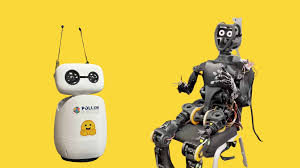
OpenCV serves as the cornerstone for computer vision applications, offering comprehensive image processing, feature detection, and machine learning algorithms. For desktop robots like Reachy Mini, OpenCV integration enables sophisticated visual behaviors with minimal code complexity.
Asynchronous Programming for Real-Time Systems
Robotics applications often require concurrent execution of multiple tasks: sensor monitoring, motor control, user interaction, and decision-making algorithms must operate simultaneously. Python's asyncio framework provides elegant solutions for managing concurrent operations without the complexity of traditional threading approaches.
Asynchronous programming patterns are particularly valuable for handling sensor data streams, managing network communications, and coordinating multiple hardware components. Proper implementation ensures responsive system behavior while maintaining code readability and maintainability.
Sensor Data Processing and Filtering
Raw sensor data typically requires processing to extract meaningful information and remove noise. Python's scientific computing libraries excel at implementing digital signal processing techniques, statistical filtering, and sensor fusion algorithms that combine multiple data sources for robust perception.
Advanced filtering techniques like Kalman filters, particle filters, and complementary filters can be implemented efficiently using NumPy and SciPy. These approaches are essential for applications requiring accurate position estimation, object tracking, or motion prediction.
Motor Control and Kinematics
Precise motor control requires understanding of kinematics, dynamics, and control theory. Python excels at implementing forward and inverse kinematics calculations, trajectory planning algorithms, and PID control systems. The mathematical nature of these operations aligns well with Python's numerical computing strengths.
For articulated robots, implementing smooth motion requires coordinating multiple joints through carefully planned trajectories. Python's matrix operations and optimization libraries make it straightforward to develop sophisticated motion planning algorithms.
Integration with AI and Machine Learning
The integration of artificial intelligence capabilities represents one of Python's strongest advantages in robotics. Libraries like TensorFlow, PyTorch, and Hugging Face Transformers provide access to state-of-the-art machine learning models with minimal implementation overhead.
Pre-trained models for computer vision, natural language processing, and decision-making can be integrated directly into robotic applications. This capability enables sophisticated behaviors like object recognition, voice interaction, and adaptive learning without requiring deep machine learning expertise.
Hardware Abstraction and Interface Design
Professional robotics development requires clean separation between hardware-specific code and application logic. Python's object-oriented programming capabilities enable elegant hardware abstraction layers that simplify testing, maintenance, and hardware upgrades.
Well-designed interfaces allow application code to remain unchanged when switching between different sensors, actuators, or communication protocols. This abstraction is particularly valuable for educational and research applications where hardware configurations may vary.
Error Handling and System Robustness
Robotic systems must handle various failure modes gracefully: sensor malfunctions, communication timeouts, motor stalls, and unexpected environmental conditions. Python's exception handling mechanisms provide structured approaches to error detection, logging, and recovery.
Implementing comprehensive error handling requires anticipating failure modes, providing meaningful error messages, and designing recovery strategies that maintain system safety. Logging frameworks help diagnose issues during development and deployment.
Testing Strategies for Robotic Systems
Testing robotic software presents unique challenges due to hardware dependencies and real-world variability. Python's testing frameworks support multiple testing approaches: unit tests for individual components, integration tests for hardware interfaces, and simulation-based testing for complete system validation.
Mock objects and hardware simulators allow testing of application logic without physical hardware, enabling rapid development cycles and continuous integration workflows. This testing infrastructure is crucial for maintaining software quality as system complexity grows.
Performance Optimization Techniques
While Python's interpreted nature can impact performance for computationally intensive tasks, numerous optimization strategies exist for robotics applications. NumPy vectorization, Cython compilation, and selective use of C extensions can achieve near-native performance for critical operations.
Profiling tools help identify performance bottlenecks, while algorithmic optimizations often provide greater improvements than micro-optimizations. Understanding when and how to apply these techniques ensures smooth real-time operation.
Communication and Networking
Modern robotic systems often require network communication for remote control, data sharing, and cloud integration. Python's extensive networking libraries support various protocols and communication patterns, from simple HTTP APIs to complex distributed systems.
WebSocket connections enable real-time bidirectional communication, while MQTT provides efficient publish-subscribe messaging for IoT integration. RESTful APIs facilitate integration with web services and cloud-based AI platforms.
Configuration Management and Deployment
Professional robotics applications require systematic approaches to configuration management, dependency handling, and deployment. Python's packaging ecosystem, virtual environments, and configuration libraries support reproducible deployments across different platforms and environments.
Docker containerization provides additional deployment flexibility, enabling consistent execution environments regardless of host system variations. This approach is particularly valuable for educational robotics where diverse hardware and software configurations exist.
Code Organization and Architecture Patterns
Large robotics applications benefit from well-established software architecture patterns. The Model-View-Controller pattern separates user interface concerns from application logic, while component-based architectures enable modular development and testing.
State machines provide structured approaches to managing complex robotic behaviors, while observer patterns facilitate loose coupling between system components. These architectural decisions significantly impact long-term maintainability and extensibility.
Documentation and Code Quality
Robotics projects often involve interdisciplinary teams where clear documentation and code quality standards are essential for effective collaboration. Python's docstring conventions, type hints, and automated documentation generation tools support comprehensive project documentation.
Code quality tools like pylint, flake8, and black enforce consistent coding standards and catch potential issues before deployment. These tools integrate well with development workflows and continuous integration systems.
Security Considerations
Connected robotic systems face various security challenges including network vulnerabilities, data privacy concerns, and physical safety implications. Python security best practices include input validation, secure communication protocols, and proper authentication mechanisms.
Regular security audits, dependency vulnerability scanning, and secure coding practices help protect robotic systems from malicious attacks and unintended security exposures. These considerations are increasingly important as robots become more connected and autonomous.
Debugging and Development Tools
Effective debugging tools are crucial for robotics development where issues may involve complex interactions between software, hardware, and environment. Python's debugging capabilities, combined with robotics-specific tools, enable systematic problem diagnosis and resolution.
Interactive development environments, real-time data visualization tools, and remote debugging capabilities facilitate efficient development workflows. These tools are particularly valuable when working with physical robots where direct access may be limited.
Future Trends and Emerging Technologies
The future of Python robotics programming is being shaped by emerging technologies including quantum computing integration, advanced neural architectures, and edge computing platforms. These developments promise new capabilities while maintaining Python's accessibility advantages.
WebAssembly integration may enable Python robotics applications to run in browsers, while improvements in Python performance through projects like PyPy continue to address traditional limitations. These trends suggest continued growth in Python's robotics applications.
Conclusion
Python has established itself as the premier language for robotics programming, offering an optimal balance of power, simplicity, and ecosystem richness. The advanced techniques and best practices outlined in this guide provide a foundation for developing sophisticated, maintainable robotic systems.
As robotics technology continues to evolve, Python's strengths in rapid prototyping, AI integration, and community support position it well for continued dominance in the field. Mastering these advanced techniques enables developers to create robotic systems that are not only functional but also robust, scalable, and maintainable.